

Account-Based Marketing (ABM) isn’t a new concept, but for Australian and New Zealand businesses chasing high-calibre enterprise clients, it’s no longer optional, it’s the operating system for revenue growth.
The challenge with ABM, however, is execution. You can identify the perfect list of target accounts, but if your engagement strategy relies on broad, generic outreach, you’re essentially trading precision for noise. You’ve gone to the effort of choosing a sniper rifle, and then you’re using it to fire a shotgun blast.
The most successful ABM campaigns we see aren’t driven by one killer channel; they’re driven by a coordinated, three-pronged attack designed to meet the decision-maker exactly where they are, and with the right message. That attack relies on the synergy between Email, LinkedIn, and Telemarketing (or outbound calling).
Stop treating these channels as separate silos. Start treating them as a single, coordinated campaign built for specific accounts. Here’s how you design the winning ABM mix.

Why Standard Demand Generation Fails High-Value Accounts
In high-value sales, complexity is the enemy. Standard demand generation (mass emails, broad paid ads) works on a simple premise: volume creates opportunity. But when the average contract value climbs above $50k, the buying process changes entirely.
You’re not selling to one person; you’re selling to a buying committee. That committee has multiple stakeholders, each with different motivations and pain points. ABM is the only strategy that allows you to:
- Customise the narrative for the CFO (cost-saving) and the CIO (integration/security).
- Sequentially warm up different stakeholders before the sales team even picks up the phone.
- Prioritise engagement based on account activity, not just volume of clicks.
If your strategy isn’t multi-channel and multi-threaded across these specific roles, you’re leaving money on the table.
Channel Deep Dive: Defining the Role of Each Player
Each channel in this ABM mix has a distinct purpose. When one finishes its job, the next one takes over, creating a seamless, credible buying journey for the target account.
A. Email: The Precision Opener
In the ABM context, email isn’t about bulk newsletters; it’s about hyper-personalised, 1:1 outreach.
- Role: To deliver a custom, relevant value proposition and gauge interest.
- The Key: The research you’ve done on the target account must make the email feel like it was written only for them. Reference their company news, a recent job move, or a competitor’s challenge.
- Data Advantage: Email is your first major data collector. If they open the email, click the link, or view the attached content, that activity signals intent. This signal immediately feeds into the sequencing of the other two channels.
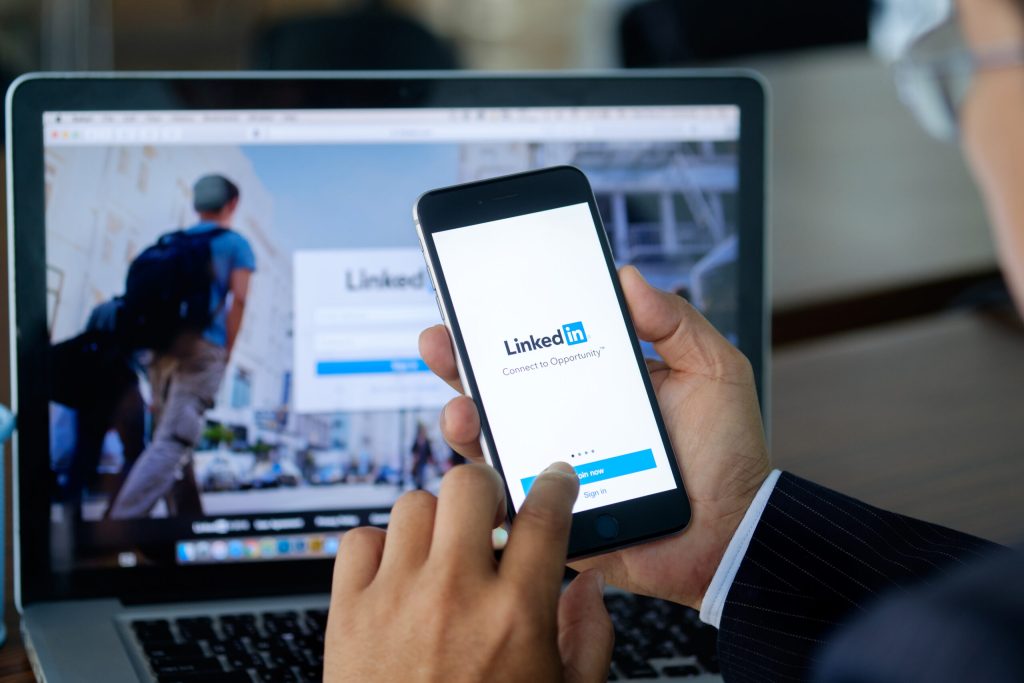
B. LinkedIn: The Context and Credibility Builder
LinkedIn is where your credibility is established and your message gains social proof. You don’t want your first cold contact to be a call; you want it to be a call they’ve been passively expecting because they’ve seen your face (or your brand) everywhere.
- Role: To create a persistent, relevant presence and warm up the account ecosystem.
- The Key: Use highly targeted LinkedIn advertising (Account Targeting) to run dark posts (ads that only your target accounts see) that address their specific challenges. Simultaneously, your sales team should be engaging with decision-makers’ content and sending personalised connection requests.
- The Difference: LinkedIn turns a cold call into a slightly less-cold call. It provides a visual context for your brand and expertise before the human conversation even begins.
C. Telemarketing/Outbound Calling: The Intent Validator
The phone call is the most expensive and time-consuming channel, which is exactly why it should be reserved for validated intent.
- Role: To qualify the opportunity, validate the pain point, and secure the meeting. This is the hand-off to sales.
- The Key: This is not a cold-call script. This is a conversational follow-up based on activity the account has already demonstrated. The dialogue starts with: “I noticed you recently viewed our whitepaper on X—is that particular challenge something you’re actively prioritising right now?”
- Efficiency: By only calling accounts that have shown engagement via email or LinkedIn (or both!), you dramatically increase call-to-meeting conversion rates. You are respecting the prospect’s time because your outreach is highly relevant and timely.
The Synergy: How the Mix Works in Sequence
The ABM mix is defined by coordination. Here’s a typical, high-conversion sequence:
- Preparation (Targeting): Your marketing team loads the target account list into LinkedIn Ad Manager and your email platform.
- Week 1 (Context and Warm-up): The account starts seeing relevant, targeted LinkedIn dark posts and brand messages.
- Day 5 (The Personal Nudge): The decision-maker receives a hyper-personalised email from a Business Development Representative (BDR) referencing their industry and the pain points shown in the dark post.
- Tracking (Intent Trigger): If the prospect opens the email and clicks the link, they immediately move to the High-Priority Calling Queue.
- Day 7 (The Human Connection): The BDR calls the prospect with a timely, contextual opener (“I saw you were interested in our X solution…”). The call focuses on validating the pain and booking a meeting.
- Continuous Engagement: If the call fails, the account is moved to a continuous nurturing sequence on LinkedIn and via email, cycling through different stakeholders.
This sequential, data-driven approach dramatically improves your overall ABM campaign efficiency because it ensures the high-touch, high-cost channel (the phone call) is only used when the account is demonstrably ready to talk.
Measuring Success: The True Account-Based Marketing ROI
Forget measuring Clicks, Opens, and Cost Per Lead (CPL). In ABM, you need to be tracking account-level metrics to truly understand the ROI of your three-channel mix:
- Account Engagement Score (AES): A unified score tracking activity across all three channels. This tells you which accounts are “warm” enough for a call.
- Account Win Rate: The percentage of target accounts that move from prospect to signed customer. This is the ultimate metric for ABM success.
- Pipeline Velocity: How quickly a target account moves through your sales stages once they become qualified. The higher the channel coordination, the faster this should be.
- Cost of Account Acquisition (CAA): The total cost of the marketing and sales efforts required to win one specific target account.
When you use the combined power of Email, LinkedIn, and Telemarketing, you’re not just generating leads; you’re building deep, predictable relationships with the accounts that matter most to your business. This coordination is the key to unlocking consistent, high-value business growth.